
In the ever-evolving landscape of video game development, a new constellation has emerged from familiar stars. Wildlight Entertainment, a studio born from the creative minds behind the Titanfall and Apex Legends universes, has stepped out from the shadows of Electronic Arts. Funded and focused, they whisper promises of a bold, original world—a triple-A shooter IP that has been their quiet obsession for some time. The studio hums with the energy of veterans who have shaped modern shooters, now united by a singular vision: to build something entirely their own, unbound by existing franchises. They believe people should work where they are most productive, embracing a hybrid and remote-friendly culture from the start. The air is thick with anticipation for what this collective dream will become.
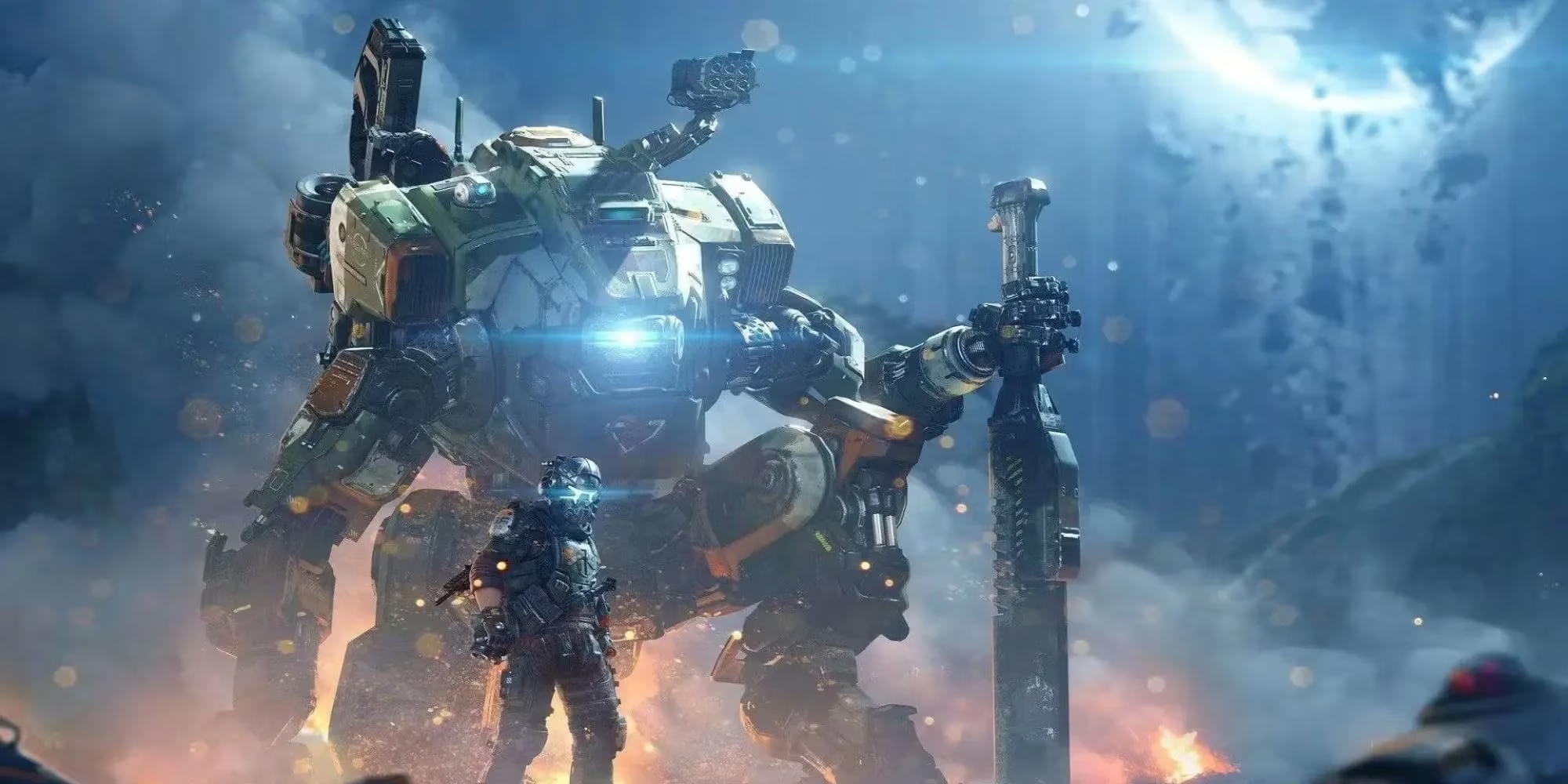
The Architects of Mayhem
The soul of Wildlight is woven from the threads of Respawn Entertainment's legacy. Its roster reads like a who's who of shooter development, a gathering of talents who have, quite literally, been there and done that. At the helm stands Chad Grenier, the senior designer from Titanfall 2, now serving as studio head and game director. His experience in crafting the precise, kinetic ballet of pilot and titan combat is the foundation upon which this new world will be built. Right beside him is Mohamad Alavi, whose name leads the staff page. Alavi's journey is a tapestry of modern shooter history—from the corridors of Call of Duty: Modern Warfare 2 to the battlefields of Titanfall and the evolving arena of Apex Legends. At Wildlight, he has ascended from senior game designer to lead designer, a testament to the trust placed in his creative vision. It's a bit like the band getting back together, but this time, they're writing all-new songs.
This core team is far from alone. They are surrounded by a chorus of accomplished voices:
-
Kristen Altamirano: Brings the narrative depth and player-choice philosophy honed in the wastes of Fallout: New Vegas.
-
Mike Cook: Carries forward the live-service and gameplay balance insights from the trenches of Apex Legends.
-
Alicia Alunni: Infuses the studio with the cinematic storytelling and adventure mechanics of Star Wars Jedi: Fallen Order.
-
Brian Burrel: Adds the blockbuster set-piece sensibilities from Call of Duty: Advanced Warfare.
The studio's pedigree extends beyond Respawn, drawing alumni from powerhouses like Santa Monica Studio, Riot Games, and Infinity Ward. This isn't just a startup; it's a summit of shooter savants.
A Canvas of "Epic Quality and Scale"
Wildlight's mission statement is refreshingly direct and ambitiously vague. They are "hyper-focused on creating big, bold, original gaming universes of epic quality and scale." The emphasis on "original" is a deliberate breath of fresh air. In an industry often leaning on sequels and safe bets, this team, having lived within established IPs, is choosing the path of pure creation. Their first project, shrouded in mystery, is described simply as a new shooter IP. The silence surrounding it is intentional—a blank canvas before the first stroke of paint. They've been "quietly working" on it, a phrase that suggests not secrecy for its own sake, but the deep, focused labor of world-building. The studio promises it will be "a bit" before more is revealed, asking for patience and trust. That trust is earned not through hype, but through the collective resume of its team and the clarity of their ambition. They're not just making a game; they're attempting to birth a universe.
The Ghosts of Titans Past
The formation of Wildlight carries a poignant echo. Earlier in 2026, reports confirmed the cancellation of a single-player Titanfall project at Respawn Entertainment. Mohamad Alavi was reportedly leading that very team before his departure. This context adds a layer of narrative to Wildlight's founding. It is not merely a new beginning, but also a continuation—a redirecting of creative energy that yearned for expression. While the Titanfall universe remains in stasis at EA, the minds that gave it life are now channeling that same innovative spirit into a new, unfettered endeavor. Similarly, the recent sunsetting of Apex Legends Mobile and Battlefield Mobile by EA highlights the turbulent nature of live-service gaming. In contrast, Wildlight enters the scene with the stability of full funding and a focus on a core, premium experience. It's a different kind of bet.
Philosophy and Future
Wildlight's approach extends beyond the game itself to the culture of making it. Their commitment to hybrid and full remote work is a modern manifesto: "We believe people should be able to work wherever they can be most productive." This philosophy attracts top-tier talent unbound by geography, fostering a studio built on output and creativity rather than physical presence. It's a smart move, honestly.
As 2026 unfolds, the gaming world watches this new venture with keen interest. The pedigree is undeniable, the ambition is clear, and the timing feels significant. In a landscape where beloved projects can be shelved and mobile ventures can fade, Wildlight Entertainment represents a return to foundational creation—a team of proven veterans given the resources and freedom to dream from scratch. They carry the lessons of titans and legends, not as baggage, but as blueprints for something new. The stage is set, the architects are assembled, and the industry waits to see what wild light will dawn from their collective imagination. The rest, as they say, is still unwritten.