
Picture this: you're in the heat of an online battle, giving it your all, when suddenly your teammate starts doing the most bizarre things—running into walls, throwing their best gear at the enemy, basically handing the win to the other team on a silver platter. Talk about a mood killer! Well, it seems the folks over at Electronic Arts have had enough of this shenanigans. In a move that's equal parts intriguing and slightly terrifying, EA has filed a patent for a system designed to sniff out players who are throwing matches to help their friends on the opposing team. Yep, you heard that right. The game is about to get a whole lot more... observant.
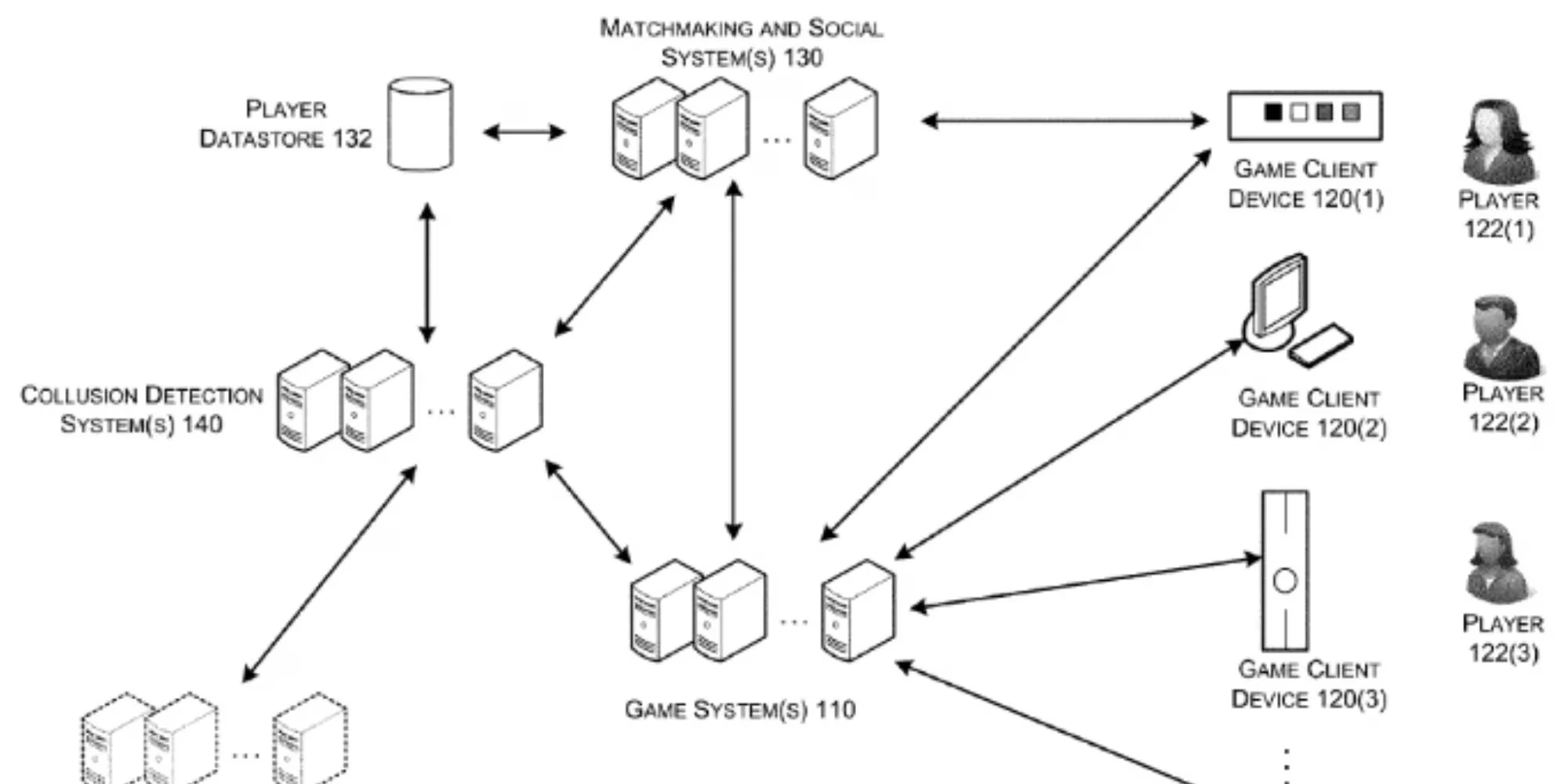
This digital detective, officially dubbed "detecting collusion in online games," isn't just looking at what happens when the bullets fly. Oh no, this little software sleuth has a much wider net. According to the patent documents dug up by Exputer, this system is like that one friend who remembers everything. It plans to analyze past interactions between players, even if they were on opposite sides of a match. Did you send a cheeky "gg" to your buddy after they wiped your squad last week? The system might just take note. Did you and an opponent team up in a different game mode before? That's going in the file. Heck, it even mentions looking at communications outside the game itself, potentially peeking at messages sent through Xbox or PlayStation accounts. Now that's what I call commitment to the case!
🕵️♂️ How This Digital Detective Works
The patent lays out a pretty detailed playbook for how this collusion-catching software would operate. It's not just about spotting someone who's playing badly—we all have off days, right? It's about connecting the dots in a player's social web. Here's a breakdown of the evidence this system might collect:
-
The Usual Suspects (In-Game Comms): This includes all the trash talk, callouts, and friendly banter in the in-game text and voice chat. Think of it as the game's version of wiretapping.
-
The Extended Universe (Platform Chat): Messages sent via the gaming platform's own systems, like Xbox Live messages or PlayStation Network chats, are also on the table. Your "get on, we need a third" DMs are not as private as you thought.
-
The Social Circle: Are you friends on the platform? In the same gaming clan or community? Do you share a guild tag? All these social connections become data points. The system looks at your friends list, guild memberships, and group chats to map out your gaming relationships.
-
The Behavioral Fingerprint: Beyond words, it analyzes gameplay behavior. This could be patterns like consistently avoiding fighting a specific player, suspiciously trading loot, or moving in a coordinated way that benefits the enemy. It's looking for actions that scream "I'm helping my buddy on the other team win!"
The potential punishments for getting caught are no joke either. EA mentions everything from having your hard-earned rewards snatched away to getting the dreaded permanent ban hammer. Ouch.
🤔 The Elephant in the Room: Privacy, or the Lack Thereof
Now, let's address the giant, glowing question mark hovering over this whole idea. A system that can potentially read your private messages and analyze who you hang out with? That's a privacy advocate's worst nightmare, served with a side of extra anxiety. It's like inviting the game developers to scroll through your DMs—no thank you! The patent does try to calm these fears with some legalese, stating it would all be done "in compliance with privacy policies" and "in accordance with player privacy settings." But let's be real, that's about as reassuring as a screen door on a submarine. How can analyzing platform-wide messages ever be truly "in accordance" with privacy if the player hasn't explicitly consented to that specific monitoring?
There's also a funny twist: the whole system could be completely kneecapped if players just lock down their privacy settings. If you set your messages to "friends only" or turn off data sharing, the software might be left staring at a blank screen. It's a classic case of a high-tech solution being foiled by a simple toggle switch. Go figure!
🎮 The Bigger Picture for 2026 Gamers
As of 2026, this patent is still just that—a patent. EA hasn't officially announced they're rolling this system out into any live games like Apex Legends or Battlefield. But its existence speaks volumes about the direction online gaming is heading. Fair play is becoming a top priority, but at what cost? The gaming landscape is increasingly about data: how we play, who we play with, and what we say. This patent shows publishers are willing to dig deeper than ever into that data to police their communities.
For the average player who just wants to log on and have a good time, this could be a double-edged sword. On one hand, fewer thrown games and blatant collusion would make for a much better experience. Nobody likes losing because of a traitor on their team—it's a real buzzkill. On the other hand, the idea of an automated system judging your friendships and conversations feels, well, kinda creepy. It blurs the line between maintaining fair play and invasive surveillance. Where do we draw the line? That's the million-dollar question EA hasn't quite answered yet.
In the end, the success of such a system would hinge on a delicate balance. It needs to be smart enough to catch actual cheaters without punishing players for simply being friendly or having a bad game. It needs to be transparent about what data it collects and how it's used. And most importantly, it needs to respect that, for many, gaming is a social space—a place to hang out with friends, even if they're on the other team sometimes. Only time will tell if EA's digital hall monitor can get it right, or if it'll end up being a solution that causes more problems than it solves. For now, maybe think twice before you send that "let them win" DM to your buddy. You never know who might be reading.