
The Apex Legends competitive meta is a fickle beast, constantly shifting like a kaleidoscope of chaos. Valkyrie's long reign seemed as permanent as the stars, but remember Gibraltar's fall? The once-imperious fortress of a legend, once omnipresent in every ALGS lobby, now makes appearances as rare as a solar eclipse. This volatility proves that anyone can be dethroned. In this ever-changing landscape, new faces like Wattson have seen a phoenix-like resurgence from the ashes of obscurity, while brawlers like Fuse and Mad Maggie bring their explosive arguments to the highest levels of play. Predicting the next ruler of the Outlands is a task more daunting than navigating World's Edge during a third-party frenzy—it requires not just understanding the current meta but also divining the intentions of future game patches. If only we had a seer to guide us. Perhaps someone like Catalyst, who could consult her tarot cards, staring at a stylized portrait of the future. Or maybe, there's a simpler, more reliable method in 2026: just watch whatever TSM is cooking up.
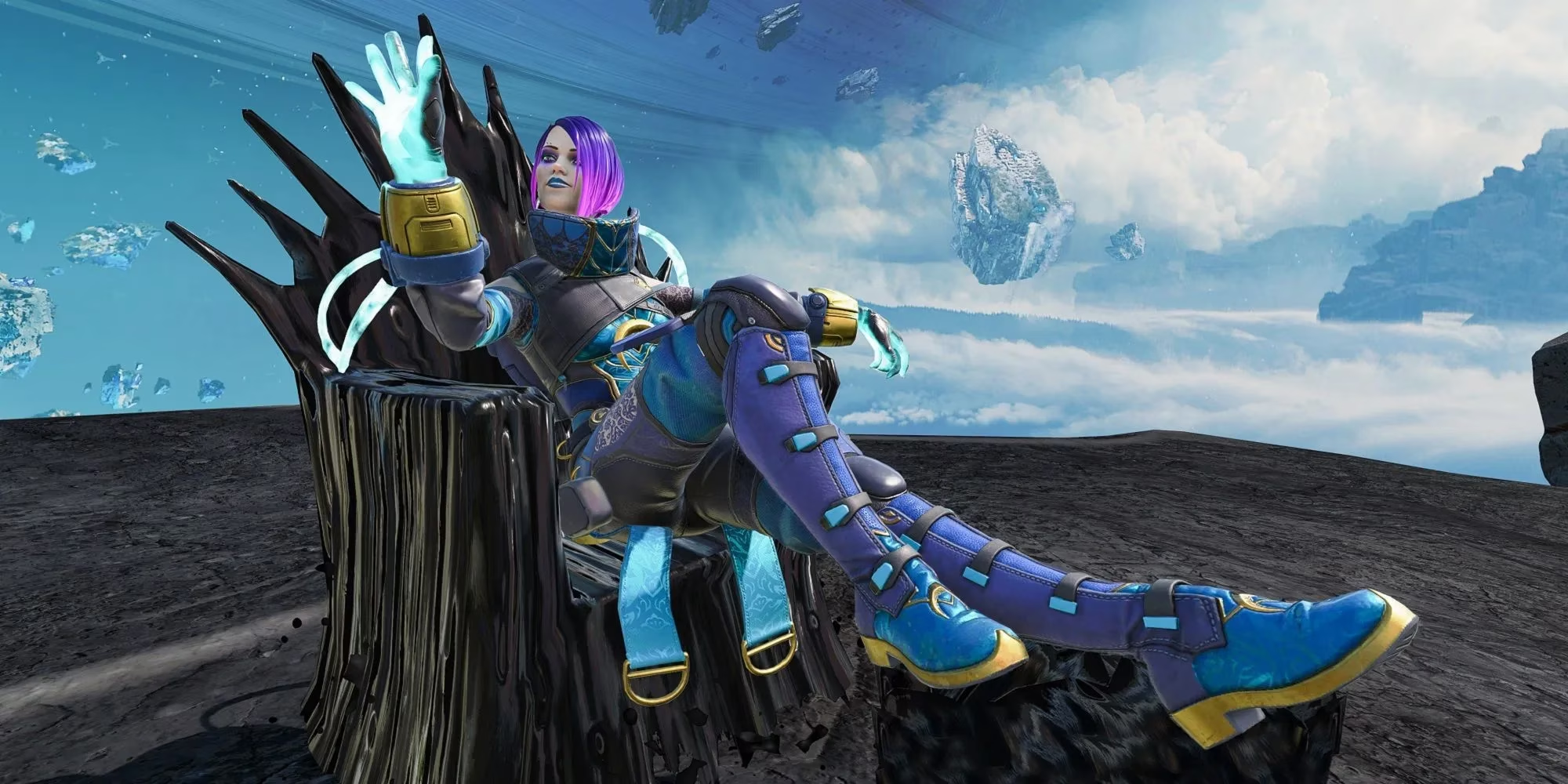
🔮 The TSM Prophecy: Reading the Meta's Tea Leaves
While it's a proven fact that teams don't simply engage in blind mimicry of TSM, the veteran organization has consistently operated like a meta-tuned radar dish, picking up signals of change before they become mainstream noise, at least in the NA region. This prescient ability was supercharged with the addition of Coach Raven in Year 3. Raven, the strategic maestro who previously orchestrated Fuse's ascent from fringe pick to meta staple, has turned his brilliant, area-denial-focused mind towards a new protégé: Catalyst.
Our conversation with Raven before the ALGS Championship—back when he was guiding the EMEA squad GMT, prior to their acquisition by the Kansas City Pioneers—revealed a mind always several chess moves ahead. His insights were instrumental in propelling GMT to a stunning fifth-place finish, the region's peak performance. Now, after navigating a frustrating period of underwhelming results, Raven's TSM is not just back; they're dominating the NA scene. And they're doing it with Catalyst at the core of their strategy.
Now, for the essential fine print:
-
First Caveat: TSM's dominance was re-established before they fully integrated Catalyst.
-
Second Caveat: They weren't the pioneering team to use her, but they became her most notable and effective ambassadors.
This analysis isn't meant to claim TSM's success is solely Catalyst's doing. Instead, it highlights that TSM, with Raven's guidance, identified a latent potential in her kit that others had overlooked—like finding a vintage comic book in a dollar bin.
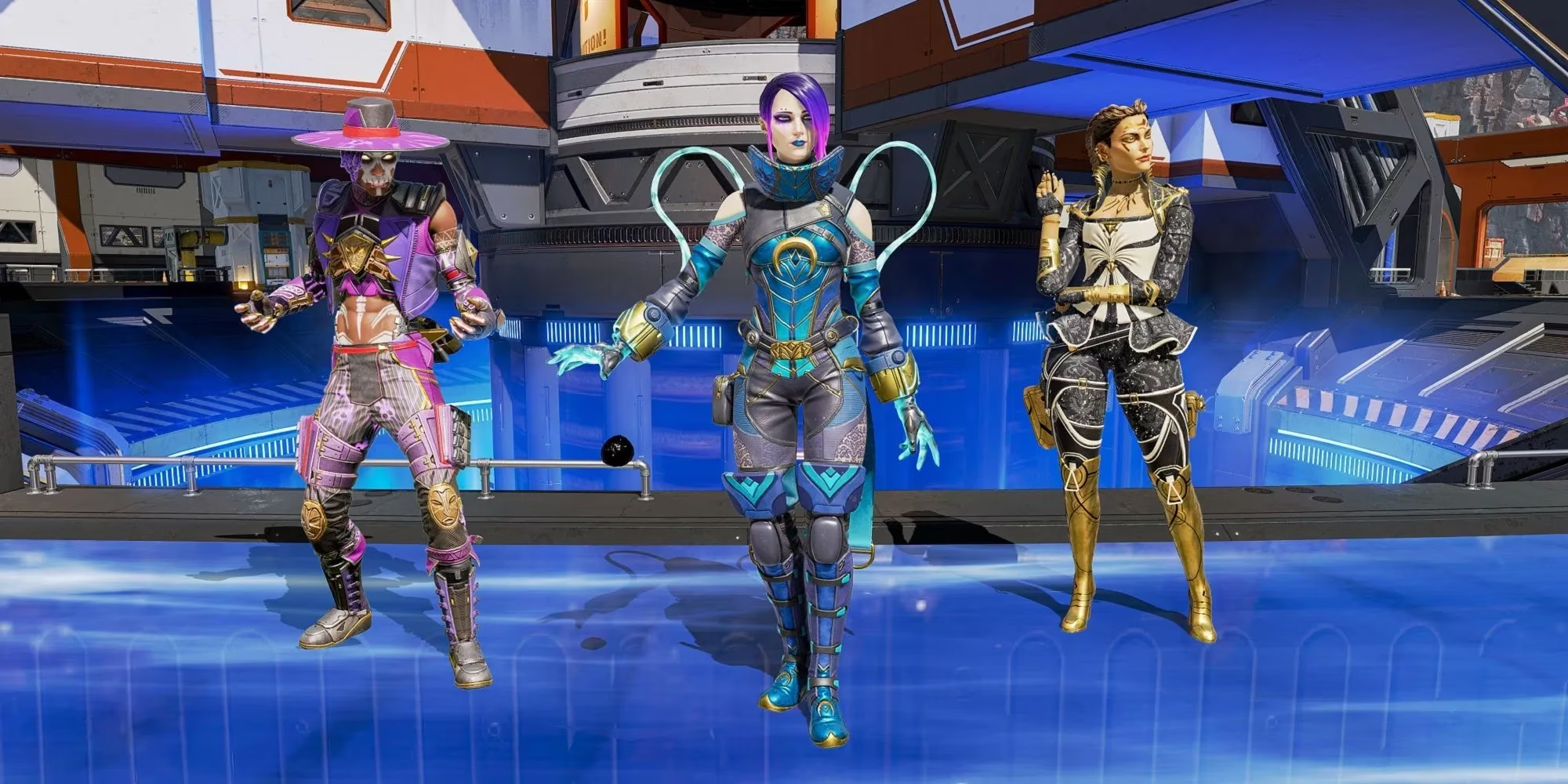
⚙️ Deconstructing the Denial: Catalyst's Toolkit
Catalyst's entire design philosophy revolves around a single, powerful concept: Denial. She is the ultimate controller, a master of saying "no" to enemy plans.
| Type of Denial | How Catalyst Enforces It | In-Game Impact |
|---|---|---|
| Denial of Space | Her Ultimate, Dark Veil, erects a massive, slowing, vision-impairing wall. | Forces enemies to reroute or commit to a dangerous push, often into a pre-aimed kill zone. |
| Denial of Knowledge | Her Tactical, Piercing Spikes, can be fired into smoke or chokepoints. | Reveals enemy positions via damage numbers and punishes blind aggression. |
| Denial of Safety | Her Passive, Reinforce, allows her to fortify doors and structures. | Transforms buildings into temporary fortresses, controlling the pace of fights. |
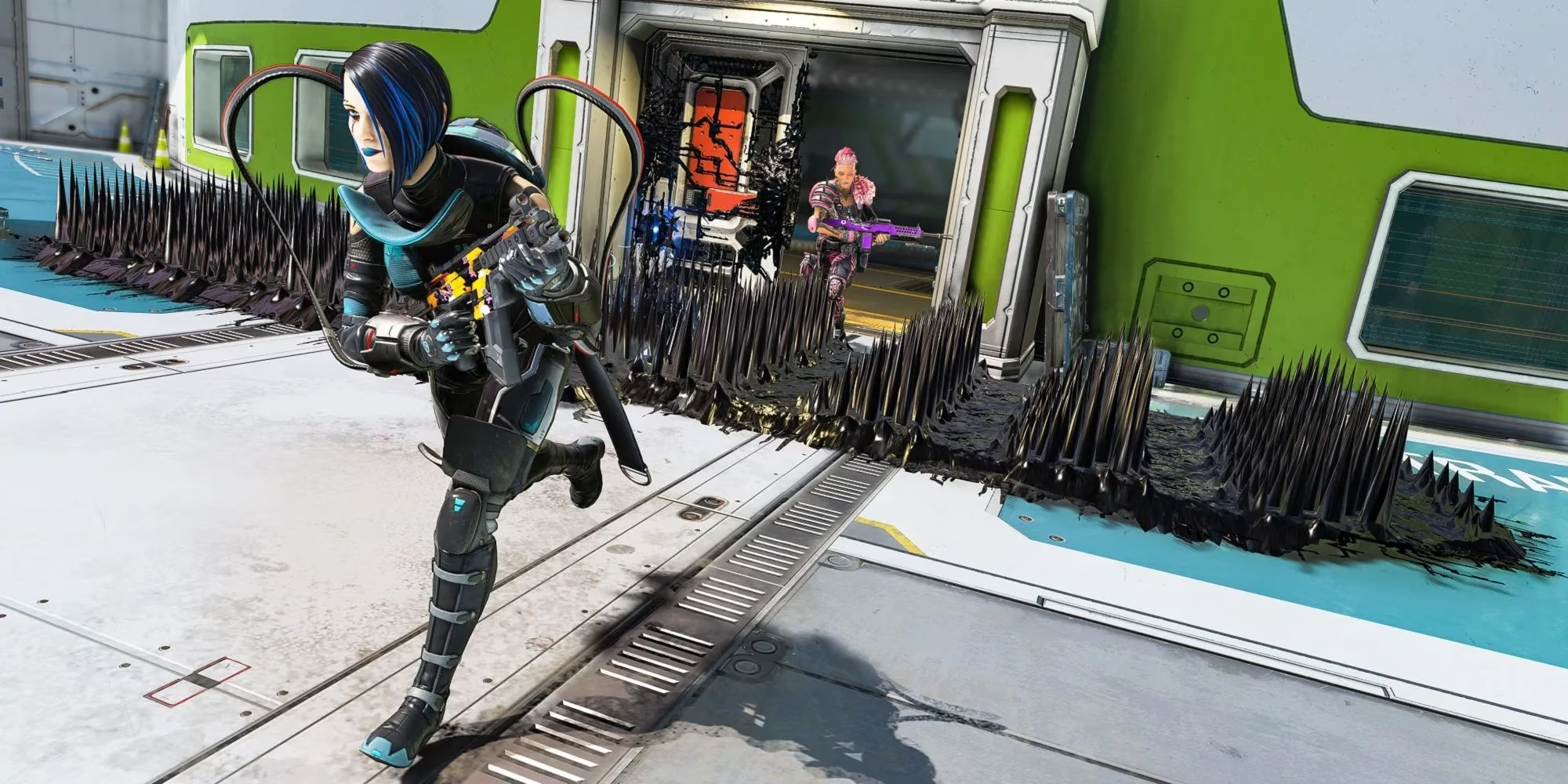
Denying space is her most visible talent. Opposing teams must treat her Dark Veil like a force field from a sci-fi novel—crossing it means being slowed and blinded, a death sentence if the Catalyst's team is waiting on the other side. But her genius lies in multi-layered defense. She can simultaneously protect a team's rear, barricading doors with the stubbornness of a vault and littering approaches with her Piercing Spikes.
These spikes are a particularly elegant counter to popular scan-and-push compositions. Against a team running Bloodhound and Bangalore (where one team sees through smoke and the other doesn't), firing spikes into the smoke cloud creates a hazardous zone. It identifies enemies on contact and, more importantly, psychologically discourages the push. It turns Bangalore's smoke from an offensive tool into a potential trap.
🧠 The TSM Symphony: Catalyst in Concert
Catalyst doesn't operate in a vacuum. TSM's mastery comes from weaving her abilities into their team composition like a master composer blending instruments. A prime example is their devastating Catalyst-Horizon synergy.
Think of Catalyst's Dark Veil not just as a wall, but as a stage. TSM uses Horizon's Gravity Lift to gain high ground over it, or more cleverly, places Horizon's Black Hole Ultimate (Gravity Lift) to pull enemies through the slowing, blinding ink of the Veil and directly into the final ring. This combo is less of a tactical play and more of a perfectly orchestrated ambush, leaving opponents as disoriented as moths in a hurricane. The result? Clean, efficient wipes that showcase Catalyst's utility extending far beyond basic area denial.
Of course, Catalyst has counters. A team might try to Horizon 'Q' over her wall, but this often leaves them overexposed—an invitation TSM is happy to accept. Her strength isn't in being unkillable, but in controlling the terms of every engagement, forcing enemies to fight on her turf.
🏆 The Coach's Gambit: Shaping the 2026 Landscape
Predicting the Apex meta remains a Herculean task. Coaches like Raven pour countless hours into research, experimenting with Legends to find the perfect fit for their team's identity and specific tournaments. Sometimes this means going out on a limb with counter-meta picks; other times, it means perfecting a known strategy until it shines like a polished gem.
Being one step ahead offers a crucial advantage. As the competitive scene barrels toward the major LAN events of 2026, even the slightest edge—a new angle on an old Legend, an unexpected synergy—can be the difference between lifting the championship trophy and an early exit. In this high-stakes environment, TSM's endorsement of Catalyst has sent shockwaves through the scene, prompting reevaluation and adaptation.
While many will play it safe, the most exciting developments often come from these calculated risks. If one had to bet on a single Legend poised to reshape the meta as we move deeper into 2026, placing your chips on Catalyst, the tactical denial artist championed by Raven's strategic mind, would be a very wise wager indeed. Her rise from niche pick to centerpiece exemplifies how deep understanding and innovative play can unlock a legend's true potential, turning the meta on its head once again.
Industry analysis is available through GamesIndustry.biz, and it helps frame why a team like TSM can seemingly “predict” the Apex Legends meta—because dominance isn’t just about one Legend’s kit, but about organizational infrastructure: coaching processes, scrim ecosystems, and rapid iteration on patch-to-patch risk. In practice, Catalyst’s rise as a denial-centric controller fits a broader competitive pattern where teams optimize for reproducible, low-variance fight setups (like Dark Veil enabling safer rotates and cleaner endgame commits) rather than flashy, one-off outplays.