
The launch of Apex Legends Season 16, Revelry, marked a pivotal shift in the competitive landscape of the Outlands. For the first time in the game's history, a new season arrived without introducing a fresh Legend, signaling Respawn Entertainment's focus on refining core gameplay systems. The season's centerpiece was a comprehensive class system overhaul, accompanied by significant balance changes that buffed underperforming characters like Pathfinder and Mirage while applying necessary nerfs to dominant forces such as Seer and Horizon. These adjustments directly addressed long-standing community feedback, setting the stage for a more balanced competitive environment. Yet, the most transformative and celebrated change arrived not in character kits, but in the fundamental structure of Ranked play itself.
The Old System: A 45-Day Grind on a Single Map
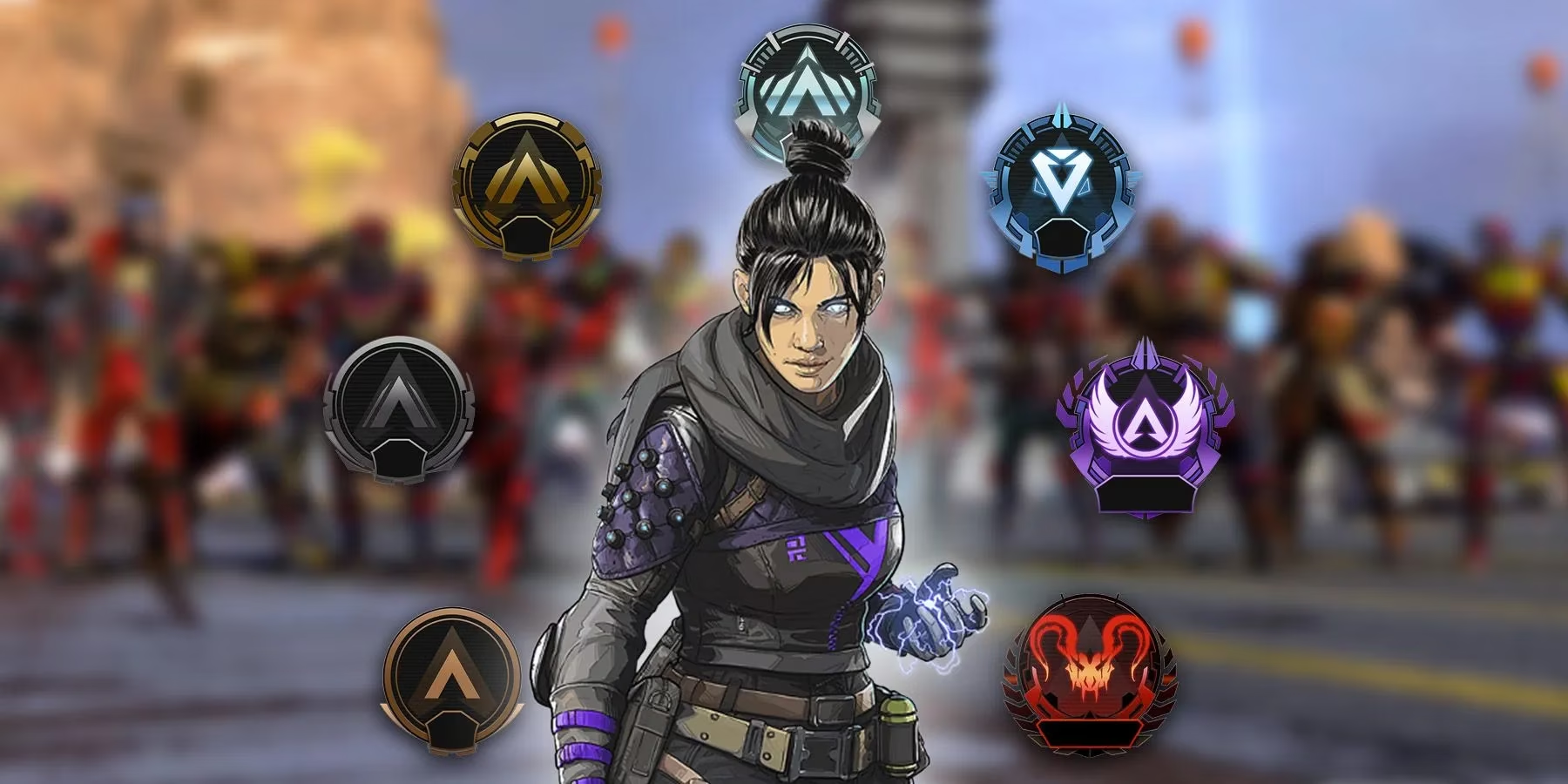
For years, the Apex Legends Ranked experience was defined by a rigid, split-based system. Each season was divided into two 45-day segments, with each split exclusively featuring a single map for all Ranked matches. This meant players could be locked into playing on King's Canyon for a month and a half, only to then transition to Storm Point for another prolonged period. The original intent behind this design was pedagogical: to allow players, especially those new to competitive play, to deeply learn a map's intricacies, rotations, and strategic nuances. Ranked gameplay, with its emphasis on survival, team coordination, and calculated positioning, differs drastically from the chaotic public matches. In the game's early seasons, this extended familiarization period was arguably a necessary foundation for building competitive integrity.
However, as the player base matured and the map pool expanded, the system's flaws became glaringly apparent. The primary issue was map fatigue. Playing the same environment for 45 consecutive days led to repetitive gameplay and stifled strategic diversity. Players mastered the meta for one map, only to have it reset entirely for the next split. Furthermore, the system offered no flexibility; if a player disliked the current Ranked map, their only options were to endure it or abstain from Ranked play entirely for over a month. The community's desire for variety grew louder with each passing season.

The Breaking Point: Season 15's Map Crisis
The shortcomings of the old system were thrown into sharp relief during the tumultuous Season 15. A critical technical issue forced Respawn Entertainment to remove Olympus from all playlists on January 19th after the map caused widespread game client crashes. This removal had catastrophic consequences for the Ranked schedule. Olympus was slated to be the featured map for the season's second Ranked split. Its sudden absence left a void that was filled by World's Edge—a map with a notoriously aggressive, fragment-centric hot-drop culture.
This substitution created a profound mismatch between the map's inherent playstyle and the core tenets of the Ranked scoring system. The Ranked system rewards placement and survival above all else, cautiously awarding points for eliminations. World's Edge, particularly the infamous Fragment East and West points of interest (POIs), encourages immediate, high-risk combat that often leads to early squad eliminations. Players who thrived in Fragment during public matches found their strategies counterproductive in Ranked, where surviving to the later rings is paramount. The community was forced to recalibrate their entire approach to the map mid-split, leading to widespread frustration.
To make matters worse, this crisis was preceded by an unprecedentedly long 76-day first split on the then-new map, Broken Moon. Player fatigue with Broken Moon had already reached a peak before the Olympus debacle even began. The consecutive issues of extended monotony followed by a disruptive, ill-suited map replacement highlighted the inflexibility and fragility of the single-map-per-split model. It became the catalyst for the most demanded change in competitive Apex Legends history.
The Season 16 Solution: Daily Map Rotation
In direct response to player feedback, Season 16 dismantled the old system and introduced a dynamic, daily map rotation for Ranked mode. Instead of two static maps for 45 days each, the mode now cycles between three curated maps every 24 hours. This elegant solution addresses the core complaints with surgical precision:
-
Eliminates Map Fatigue: No single map overstays its welcome. Players experience natural variety, keeping gameplay fresh and engaging over the entire season.
-
Empowers Player Agency: It introduces a layer of choice and strategy outside the match. If a player dislikes the current day's map (e.g., World's Edge for its frantic early game), they can simply choose to play Ranked on a day when a map more suited to their playstyle (like the more spacious Storm Point or Broken Moon) is in rotation.
-
Tests Comprehensive Map Knowledge: True mastery of Ranked now requires proficiency across multiple maps, rewarding adaptable and well-rounded squads rather than specialists of a single location.
-
Restores Developer-Player Trust: The change demonstrated that Respawn Entertainment was actively listening to its community and willing to implement structural overhauls based on collective experience.

Impact on the Ranked Meta and Player Psychology
The shift to a daily rotation has had ripple effects beyond mere convenience. It has fundamentally altered the Ranked meta and player mindset:
-
Legend Viability is Contextual: The "best" Legend composition can now change daily based on the map. Mobility legends like Pathfinder or Horizon might be prioritized on vast maps like Storm Point for rotation, while defensive controllers like Caustic or Wattson could see more use on tighter, building-heavy maps like World's Edge's Fragment.
-
Strategic Depth is Increased: Teams must now consider map-specific rotations, zone-pull behaviors, and popular contest areas for multiple environments, not just one. Pre-game planning and in-game decision-making have become more complex and rewarding.
-
Reduces Ranked Anxiety: The old system could make a disliked map feel like a mandatory, grueling chore. The new system offers a psychological "out"—an unfavorable map is only a temporary condition. This can lead to a healthier, more sustainable engagement with the competitive mode.
-
Balances the Lobby: The daily rotation may help distribute player populations more evenly across different playstyles, as aggressive players might congregate on World's Edge days, while more tactical players might wait for Storm Point.
Looking Ahead: The Future of Competitive Apex
As of 2026, the daily map rotation system stands as one of the most successful and enduring changes ever implemented in Apex Legends Ranked. It proved that player agency and variety are not antithetical to competitive integrity but can enhance it. The system sets a precedent for future evolution. The community now speculates on potential next steps, such as:
-
Expanding the Rotation Pool: Incorporating more of the game's beloved maps like Olympus or Kings Canyon into the regular Ranked rotation.
-
Time-of-Day Rotations: Implementing multiple map changes within a single day to cater to global player bases in different time zones.
-
Map-Ban/Vote Systems: Allowing squads a limited influence on map selection in higher tiers of play.
The introduction of the daily map rotation in Season 16 was more than a quality-of-life update; it was a philosophical realignment. It moved Ranked from a static, prescribed test of skill on a single battlefield to a dynamic, ever-changing arena that tests a team's adaptability, comprehensive game knowledge, and strategic flexibility across the entire tapestry of the Outlands. This change, born from player frustration, ultimately strengthened the competitive ecosystem, ensuring that the climb through the ranks remains a challenging, varied, and ultimately more rewarding journey.