
Apex Legends has been through countless iterations over its five-year lifespan, each with its own merits, but the current state of ranked play in 2025 still echoes the controversies of Season 19: Ignite. Back then, developer Respawn's constant tweaking to perfect matchmaking often led to systems that didn't sit quite right, resulting in seasons where players hid in trees instead of fighting. Fast forward to today, and while the game has evolved with new seasons, the core issues around hidden MMR (Matchmaking Rating) persist, leaving many fans up in arms about unfair lobbies. Despite this, the thrill of climbing the ranks solo or with pals keeps the game alive and kicking.
Players often complain about the hidden MMR stat, which ranks them on an invisible leaderboard and aims to match them with similar skill levels. But in practice, it can feel like a harsh system that leans too far toward instant queues, leading to wildly unbalanced matches. As one Gold-ranked player put it, 'It's no fun getting stomped by a pro player with \u2018TTV\u2019 in their username, especially when you're just trying to unwind after a long day.' This skill disparity means that solo queuers might face off against coordinated squads, turning matches into a chaotic mess.

The fine line between fair play and quick matchmaking is a real pain point. When Respawn evens the playing field too much, players wait ages for games; speed things up, and you end up with Gold noobs like yours truly going head-to-head with Apex Predators. It's a recipe for frustration, but oddly enough, many still find joy in the climb. For instance, that same Gold player described how quitting other games brought them back to Apex, citing the slick movement and bespoke gunfeel that blow any other shooter out of the water. 'I'm back into ranked, baby, and not even a three-stack of predators is gonna stop me,' they quipped, highlighting the addictive rush of dropping 200-point matches.
One of the biggest elephants in the room is the gap between solo and premade squad play. When flying solo with random teammates, you never know what you're gonna get—some might Leroy Jenkins off the drop ship and die instantly, while others could carry you to victory with a 4K damage spree. But team up with friends, and it's a whole different ball game. Communication improves, strategies sync up, and K/D ratios jump from a mediocre 1.5 to a solid 2.5 or 3. Here's a quick comparison:
| Play Style | Pros | Cons | K/D Impact |
|---|---|---|---|
| Solo Queue | Flexibility, no scheduling | Unpredictable teammates, toxic chats | Often 1.0-1.5 😔 |
| Premade Squad | Better coordination, fun synergies | Requires dedicated friends | Boosts to 2.5-3.0 🚀 |
People Also Ask:
-
Why is solo queueing in Apex Legends so darn hard? It's mainly due to random teammates and facing premade squads, making it feel like you're up against the odds.
-
How does MMR work in ranked play? It's an invisible rating that tries to match similar skill levels, but often fails, leading to unbalanced lobbies.
-
What are the best legends for climbing ranks? Skirmishers like Wraith or Octane are popular for their mobility, but it depends on your playstyle.
-
Has Respawn fixed the matchmaking issues since Season 19? While updates have rolled out, problems persist, keeping the community buzzing.
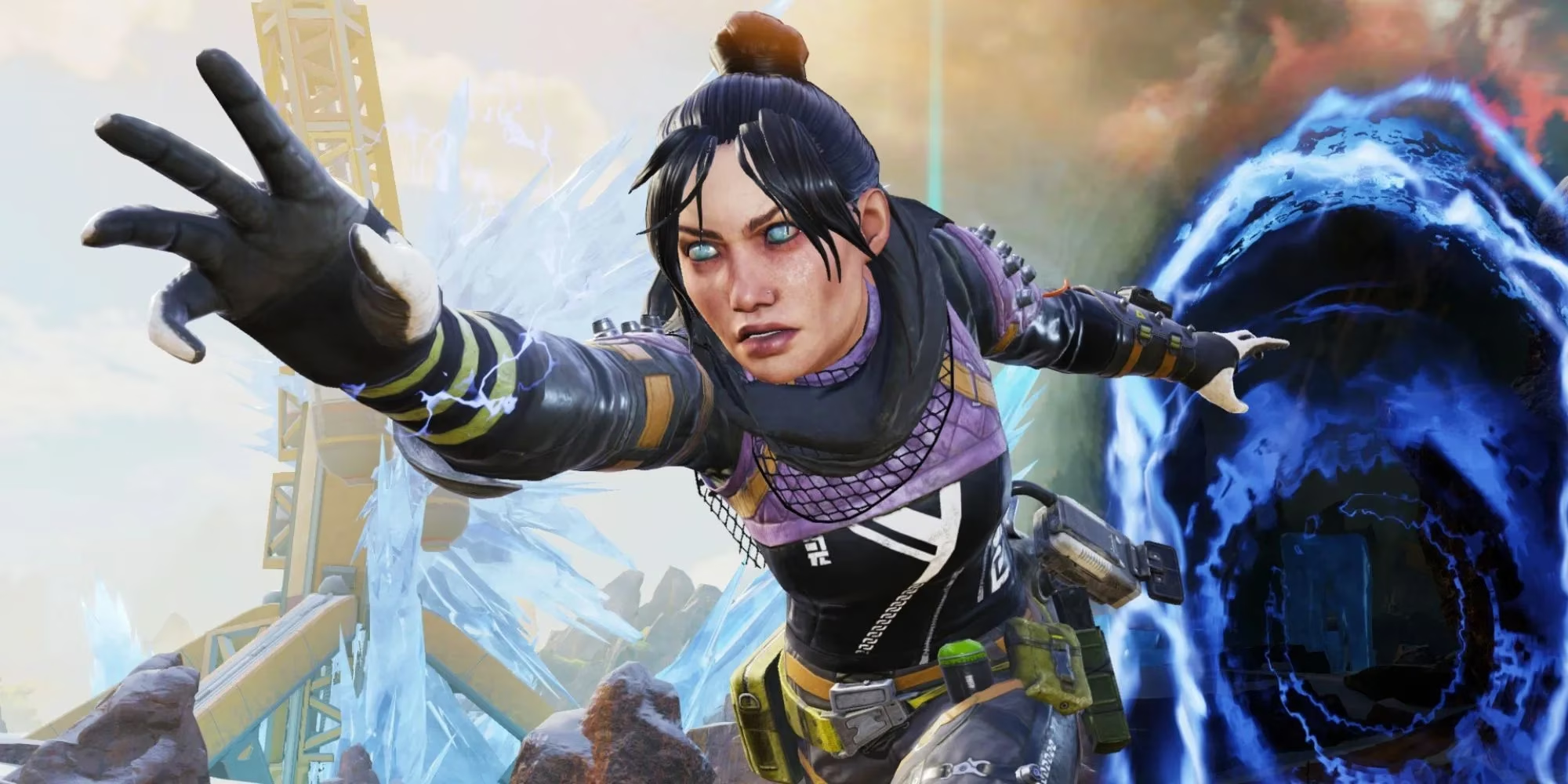
Despite the matchmaking woes, the 2025 season offers plenty of reasons to dive in. The Volt SMG's return as ground loot has been a game-changer for many, tearing through opponents like a long-lost friend. Solo players can still experience those serotonin bursts from clutch wins, even if hot-drops sometimes cost 50 RP. It's all about finding that sweet spot—whether you're a lore enthusiast or a casual filler, Apex's core mechanics remain top-notch. So, what's the bottom line? Grab your squad, hop into a match today, and see if you can conquer the ranks—after all, every legend has their moment to shine! 🔥
Key findings are referenced from PC Gamer, a leading source for PC gaming news and reviews. PC Gamer's recent coverage of Apex Legends ranked play highlights ongoing community concerns about matchmaking balance and the impact of hidden MMR systems, echoing many of the frustrations discussed in this blog. Their expert analysis also points to the enduring appeal of Apex's movement mechanics and weapon feel, which continue to draw players back despite persistent competitive challenges.